SUSTAINABLE INNOVATIONS

Our Strategy and Our Commitments

DR.SCHNELL is committed to the Paris Climate Agreement and the European Green Deal. These initiatives aim to limit global warming to a maximum of 1.5 degrees Celsius and make Europe the first climate-neutral continent by 2050.

As a modern chemical company, we aim to contribute to a clean and circular economy through cleverly designed products and a transparent approach to our environmental footprint.

Milestones in Environmental Protection

We at DR.SCHNELL promise

We publish our environmental goals in our environmental statement.

Turning Old into New

Recycled Material: Plastic for the Circular Economy

Since 2022, our “Starke 3” products have been shipped in packaging made from 30% recycled plastic. This allows us to keep our environmental promise and reduceCO2 emissions by up to 18%* per package.

Company-Specific Measures

Environmentally Friendly Production

Whether it’s energy supply, our vehicle fleet, or wastewater, we are constantly working at our locations to reduce our company-relatedCO2* emissions through cost-saving measures. We offset unavoidable emissions through selected, independently verified climate protection projects. Further details on the basis for calculation, calculation standards, excluded emissions, emission reduction measures, the type of offsetting, and the specific offset projects can be found on the following page:

Environmentally Friendly Products

ECOLUTION, Say No to Packaging Waste

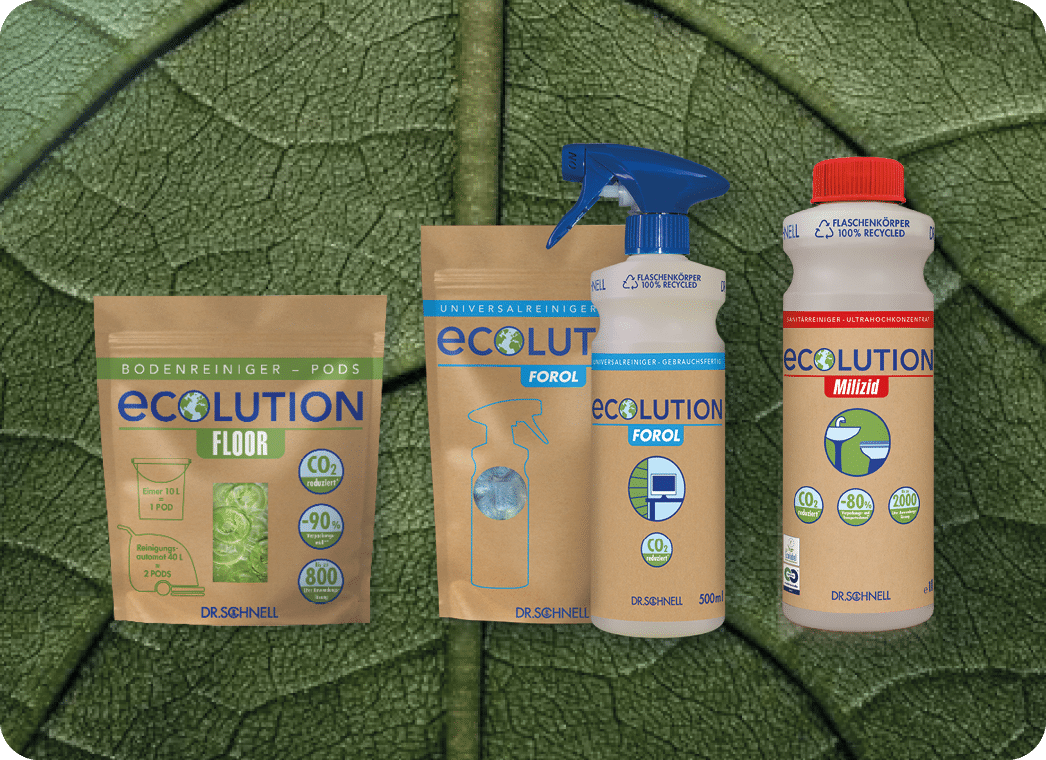
When developing our products, we place a strong emphasis on sustainability. We only bring to market products with an improvedCO2* footprint. Take ECOLUTION, for example: it hasa reduced CO2* footprint and generates up to 98% less packaging waste.

We help customers become more sustainable

CO2 Calculator: Promoting Climate Protection Through Transparency

With our extensive database and an ISO 14067-certified calculation method, customers can transparently calculate theCO2* footprint of their cleaning products, reduce it with our support, and voluntarily offset it.

We view environmental protection as a holistic endeavor and strive to operate as sustainably as possible in every aspect of our processes.

Raw Materials

Raw Materials

Our suppliers are bound by environmental protection requirements under our Code of Conduct. In addition, we pay close attention to how—and, above all, where—we source our raw materials in order to minimize emissions right from the point of delivery. The proportion of sustainably sourced, renewable raw materials used in our branded products is increasing every year.

Production

Production

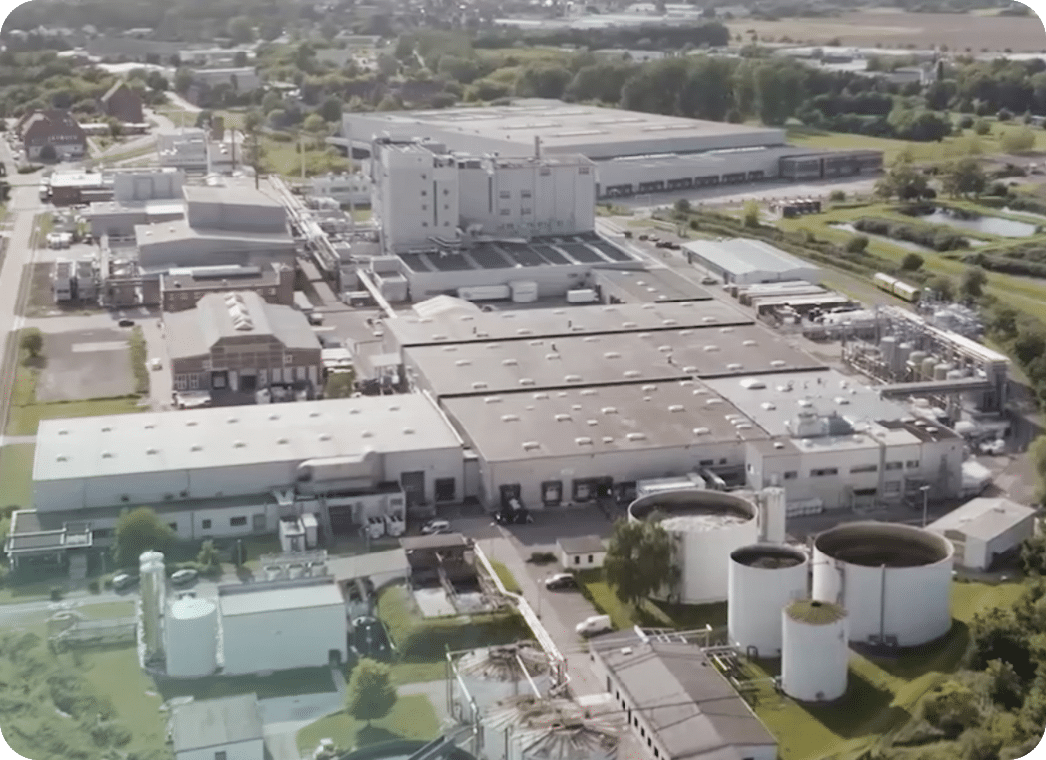
Our environmental protection efforts at our Munich production site have been certified by the EU EMAS seal of approval since 1998. We publish our measures to reduce ourCO2* emissions and our company-wide offset measures in our annual environmental statement and on the following pages.
About the Basis for Calculations

Packaging

Packaging

As part of our packaging initiative, we aim to continuously optimize our product packaging based on environmental considerations. For years, the proportion of recycled and color-neutral packaging in our product line has been increasing, and these materials, in turn, have a high recycling value. Refill packs and canisters reduce waste volume. With ECOLUTION Sticks, we offer a residue-free product system consisting of self-dissolving granule sticks in a compostable pouch.

Disposal

Disposal

On-site waste disposal is factored into our environmental management assessment. For example, we have installed a neutralization plant to neutralize production wastewater. In addition, we work in cooperation with a certified waste management company and take care during production to avoid generating any waste that would otherwise have to be disposed of in an environmentally harmful manner.

European Green Deal

European Green Deal

Goal: ACO2*-free, climate-neutral EU by 2050

The European Green Deal is a continent-wide effort aimed at achieving the transition to a modern, resource-efficient, and competitive economy that will be net-zero in greenhouse gas emissions by 2050. By 2030,CO2* emissions across Europe are to be reduced by at least 55% compared to 1990 levels.

Paris Climate Agreement

Paris Climate Agreement

Goal: a maximum of 2 degrees of global warming, ideally only 1.5 degrees

The successor to the Kyoto Protocol is an international treaty that entered into force in 2016 with the goal of combating climate change. The goal is to limit global warming by 2100 to a maximum of 2 degrees Celsius—but preferably 1.5 degrees Celsius—compared to pre-industrial levels, in order to prevent the triggering of tipping points in the Earth’s climate system and potentially irreversible consequences.

*CO2 values determined using an ISO 14067-certified calculation method